NESTING
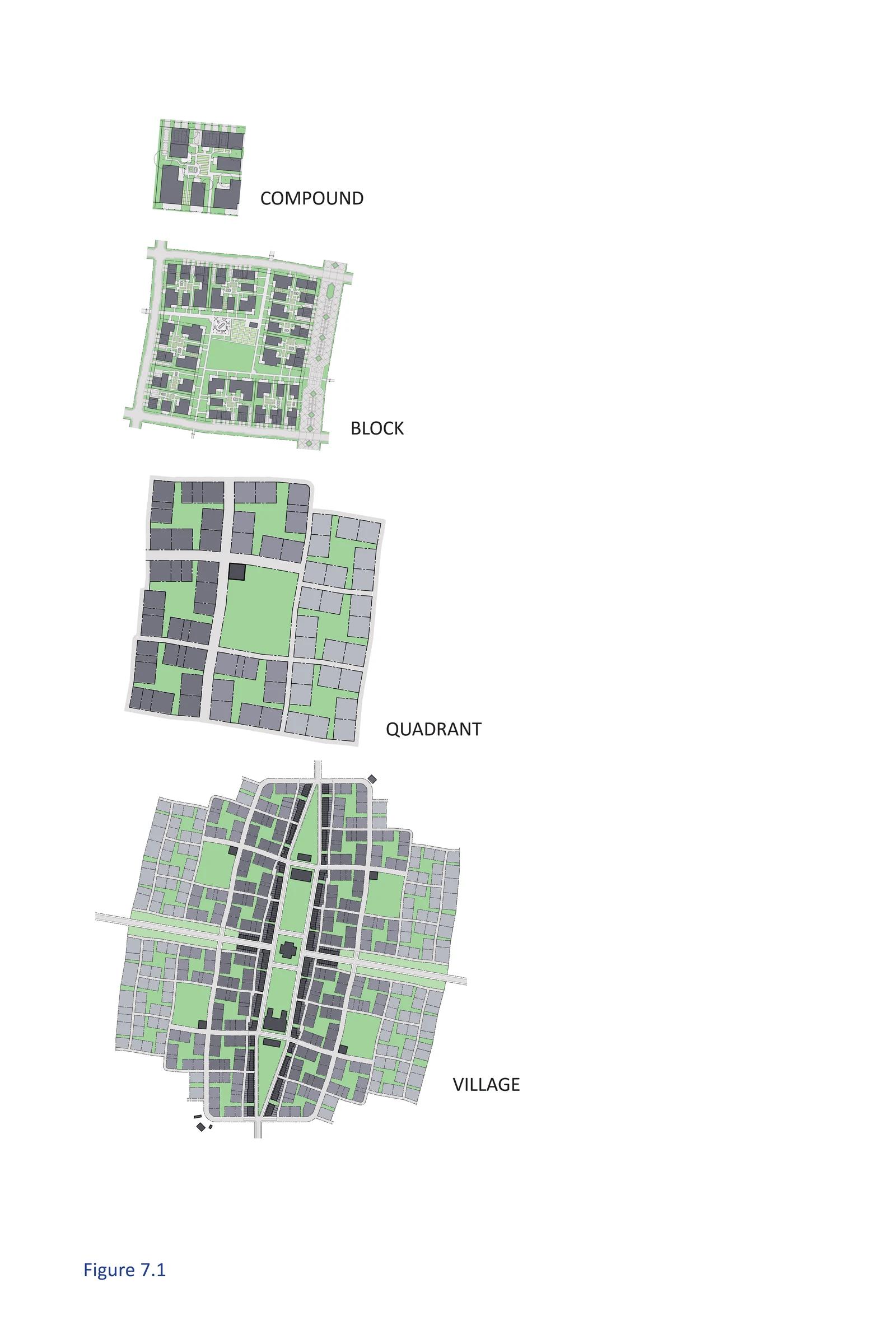
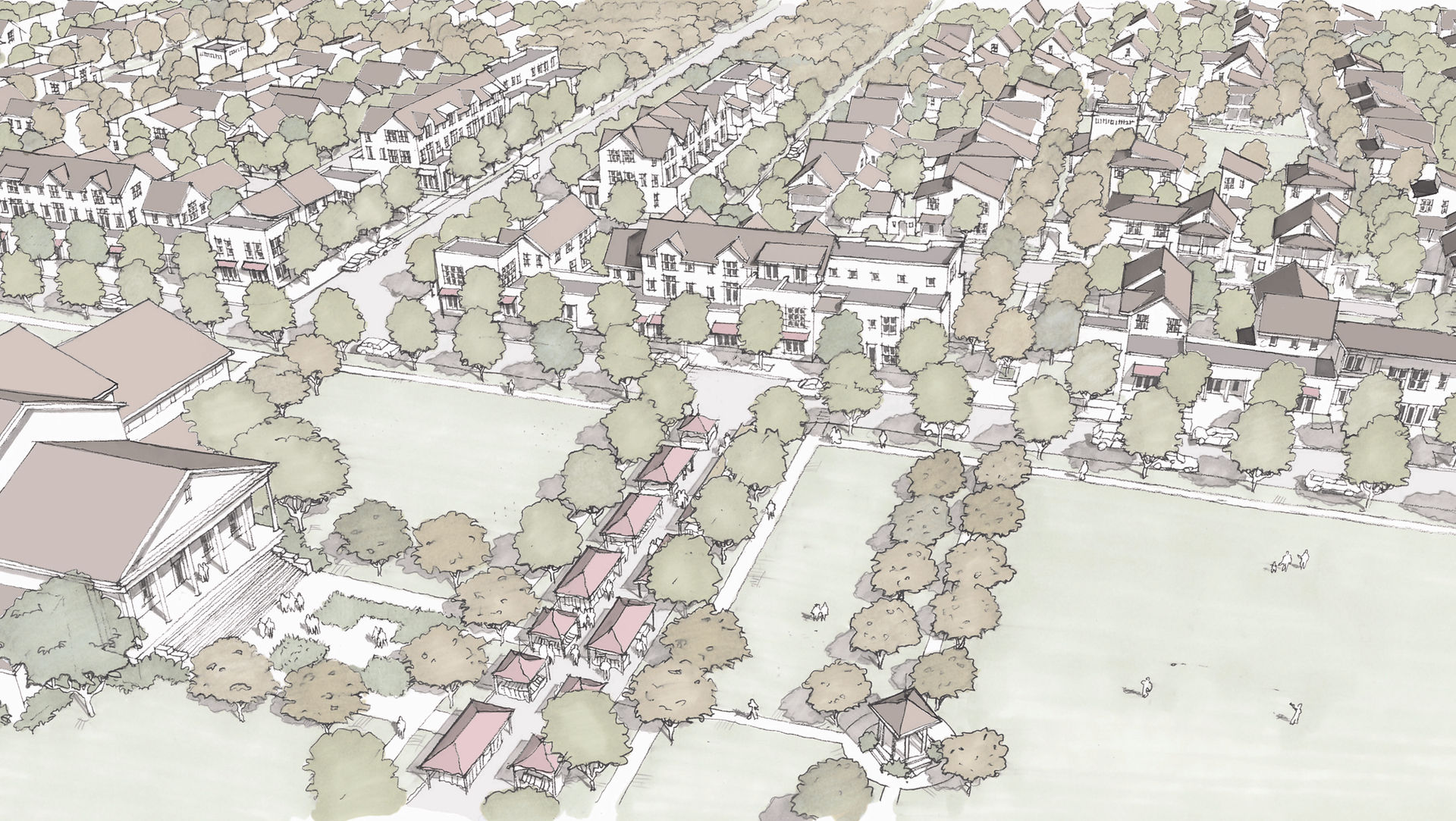
Nesting refers to the fitting of a shape, form, or object inside a larger one. Systems, organizations, and productions can also nest within each other. Within the framework of adaptation, the principle of nesting works on three levels: the organization of the sustenance systems, their management of subsidiarity, and the physical environment. These are interdependent and support one another. In the Adaptation Village model a building fits within a compound, which fits within a block, which fits within a quadrant, which fits within a village, which fits within a region. The management authorities as well as the organizations of the sustenance systems follow this nesting order as well.
We can produce energy, store water, and grow food not just at household and regional scales, as is usually the case, but also at compound, block, quadrant, and walking shed scales. The stronger the supplies within the smaller local units the more self-sufficient they become. This is how supplies and production at various scales nesting within each other create more resilient lifestyles. Improvements may be implemented and function in an incremental way. This is the strength of localization. Nesting, in principle, enables the small. There are good reasons for a strong presumption in favor of small. The advantages of large scale can come at a high cost. Large-scale systems are vulnerable. This is especially the case considering the possible system failures due to climate crisis. Small also refers to local governance. The principle of subsidiarity is all about enabling the small but also addressing the necessity of the larger-scale authorities to address issues that cannot be addressed at the local level. Largeness may (a) lead to excessive standardization and bureaucratization, (b) reduce social consciousness and the sense of personal civic responsibility, and thus, (c) weaken democratic processes.
Back