The following addresses three questions: What is the problem? What is the solution? How do we get there?
The Problem: Vulnerabilities
When we depend on regional systems for our power and water; when we count on regional distribution for our food supply; and when we expect large waste management networks to remove our garbage and waste, we are vulnerable: if and when these systems are disturbed or interrupted, life becomes very hard. When certain essential services and goods are located far away and access to them becomes difficult or impossible due to road closures and infrastructure damage, isolation becomes fatal.
The Solution: Resilience
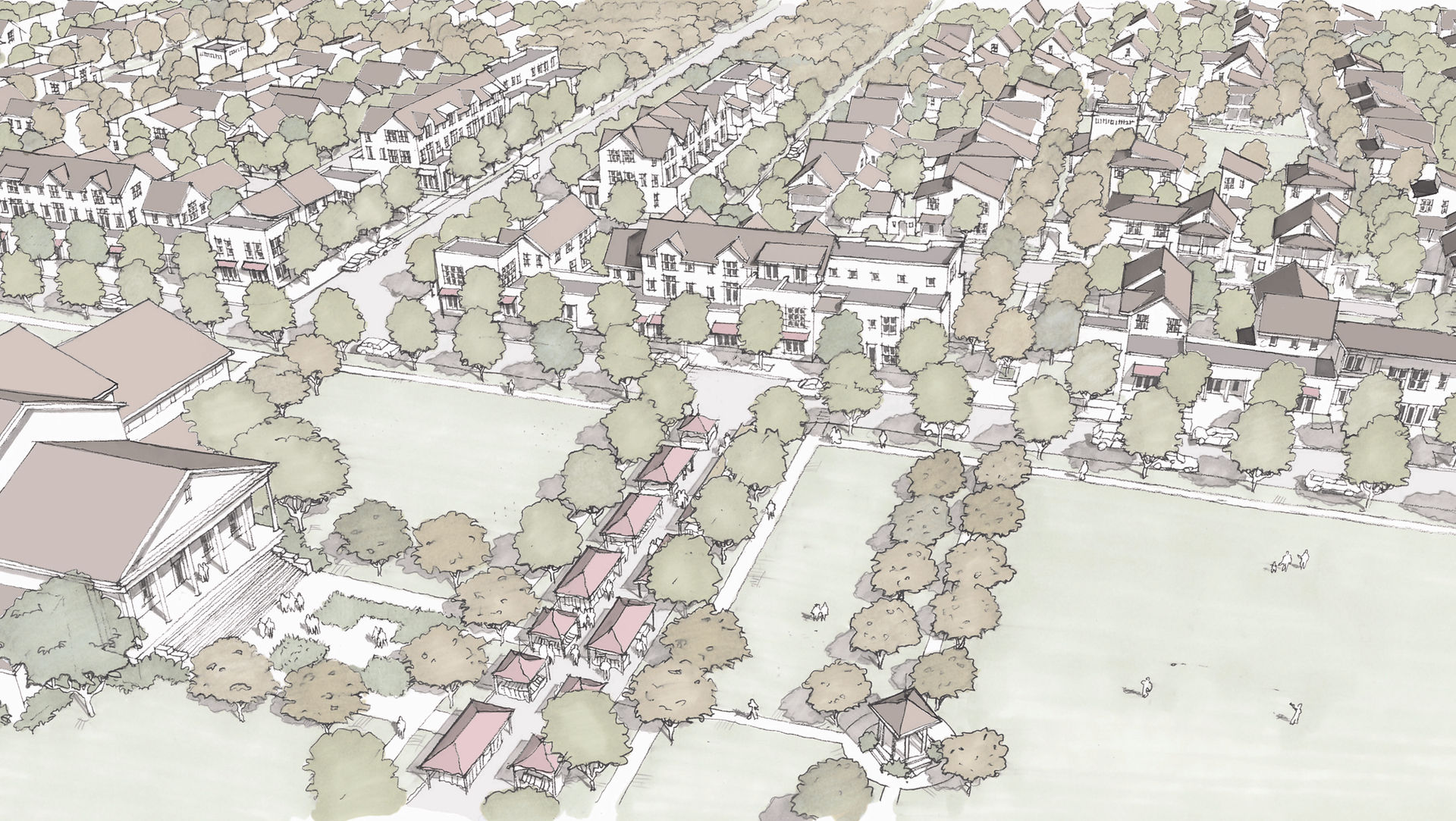
If we did have localized water and energy sources, say at household, block, and neighborhood scales, nested within the larger systems, and if we had localized food production and waste management, then we could live through interruptions and disasters relatively more easily. If we had essential services in the near vicinity and if certain essential goods were produced nearby, then survival could be possible in spite of interruptions in regional access routes. Thus, localization of sustenance systems and diversification of local services and businesses are the primary objectives in addressing our vulnerabilities and achieving resilience.
This Is How We Get There: Adaptation Enabling Act
(a synopsis)
If local governments adopt “resilient zones” within which they employ the following zoning reforms, then the State offers support via three benefits:
Benefit 1: Preferential Tax Program for Businesses (Opportunity Zones)
Purpose:
- To diversify production of essential goods and services in the vicinity.
- To create strong and healthy local economies.
Establish opportunity zones within the resilient zones for local businesses. Opportunity zones may be established in selected central areas or for the entire resilient zone, depending on the context and size of the zones.
Benefit 2: Tax Deduction of Rent
Purpose:
- To enhance financial resilience of the average household by providing owners the opportunity to receive rent.
- To diversify neighborhood service businesses by providing affordable rental options for potential employees.
Establish a tax deduction program for renting when the following two conditions are met: (1) the landlord lives on the same lot or close by, and (2) the primary breadwinner of the renting household lives close to his or her work.
Benefit 3: Subsidize Localized Infrastructure
Purpose:
- To localize sustenance systems—energy, water, and waste—and increase resilience.
Use some of the disaster recovery, hazard mitigation, and infrastructure budget proactively:
- To create block- and neighborhood-scale energy production that nests within a larger network.
- To create block- and neighborhood-scale water depositories.
- To divide large sewage and waste networks into smaller ones at the local scale, and to create local systems for each new development.
Zoning Reforms
Purpose:
- To enhance financial resilience of the average household.
- To create productive ownership opportunities.
- To diversify neighborhood service businesses and production in the vicinity.
Actions:
- Permit unrelated people to live in the same structure.
- Permit multiple dwellings (compounds) on a lot.
- Permit small-lot subdivisions (clusters).
- Permit “cottage industry and retail” and “cottage farming” everywhere within the resilient zone.
- Permit rentals everywhere within the resilient zone.
These policies are easy to implement and relatively inexpensive, yet they are effective in addressing a very important problem.